

Introduction
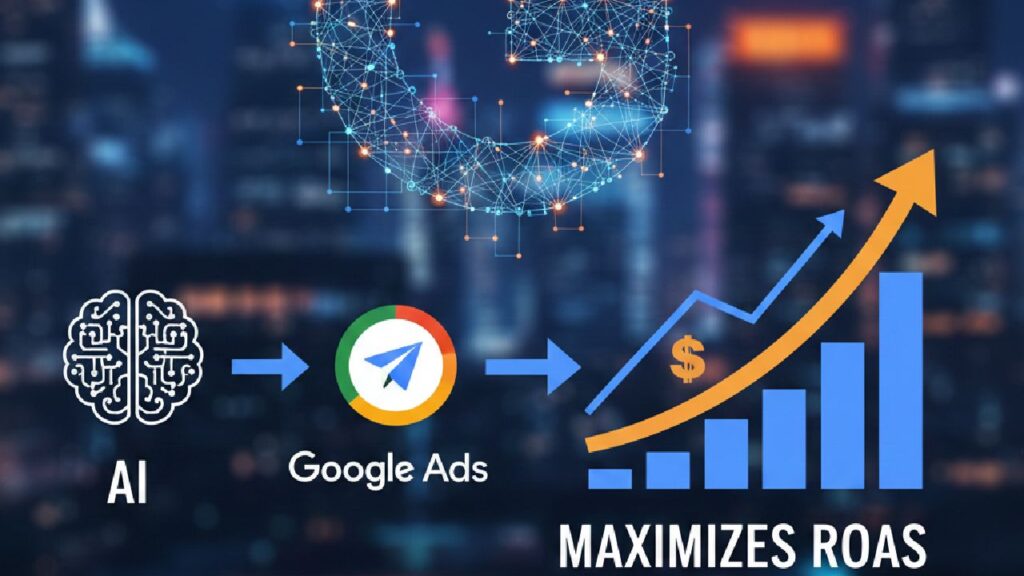
Artificial Intelligence (AI) has become a core component of modern digital advertising, and Google Ads is at the forefront of this transformation. Among its most powerful applications is Smart Bidding, an AI-driven bidding strategy designed to optimize campaigns in real time and maximize Return on Ad Spend (ROAS).
As competition and customer journeys grow increasingly complex, manual bidding alone is no longer sufficient. This article explores how AI-powered Smart Bidding works, the technology behind it, and how advertisers can use it strategically to achieve higher profitability.
What Is Smart Bidding in Google Ads?
Smart Bidding refers to a set of automated bidding strategies within Google Ads that use machine learning algorithms to optimize bids for each auction. Instead of setting static bids, Smart Bidding evaluates millions of data signals in real time to determine the optimal bid that aligns with your campaign goal.
Key Smart Bidding Strategies:
- Target ROAS (Return on Ad Spend)
- Target CPA (Cost per Acquisition)
- Maximize Conversions
- Maximize Conversion Value
- Enhanced CPC (ECPC)
For advertisers focused on revenue and profitability, Target ROAS is the most impactful strategy.
How AI Powers Smart Bidding
Google’s AI analyzes vast datasets to predict the likelihood of a conversion and its potential value before every auction. This process happens in milliseconds and considers multiple contextual signals, including:
- User search intent
- Device type (mobile, desktop, tablet)
- Location and time of day
- Browser and operating system
- Past user behavior
- Remarketing list membership
- Ad creative relevance
Using these signals, AI adjusts bids dynamically to ensure your ads appear when they are most likely to drive profitable conversions.
How Smart Bidding Maximizes ROAS
1. Auction-Time Bid Optimization
Smart Bidding operates at the auction level, not at the keyword level. This means each individual search triggers a unique bid decision based on predicted conversion value, ensuring budget is spent efficiently.
SEO Keyword Focus: Google Ads Smart Bidding, auction-time bidding, AI bidding optimization
2. Conversion Value Prediction
AI models predict not just whether a user will convert, but how valuable that conversion will be. For example, a high-intent buyer searching for premium products may trigger a higher bid than a low-value lead.
This ensures ad spend is prioritized toward users who are most likely to generate revenue.
3. Real-Time Learning and Adaptation
Unlike manual bidding, Smart Bidding continuously learns from performance data. As user behavior, competition, or market conditions change, the AI adapts automatically—without requiring constant human intervention.
This is particularly valuable during:
- Seasonal demand shifts
- Product launches
- Promotional campaigns
- Market volatility
4. Cross-Device and Cross-Channel Intelligence
Smart Bidding understands that users interact across multiple devices and touchpoints before converting. AI attributes value accurately across these interactions, improving bid decisions and ROAS calculations.
5. Reduced Wasted Ad Spend
By lowering bids for low-conversion or low-value searches and increasing bids for high-intent queries, Smart Bidding minimizes wasted spend and improves overall campaign efficiency.
Requirements for Effective Smart Bidding
To achieve optimal results, campaigns must meet certain conditions:
- Accurate conversion tracking (with conversion values)
- Sufficient historical data (typically 30–50 conversions in 30 days)
- Well-structured campaigns
- Clear performance goals (ROAS or CPA targets)
Without quality data, AI optimization will be limited.
Best Practices for Using Smart Bidding
Set Realistic ROAS Targets
Avoid setting overly aggressive ROAS targets initially. Allow the algorithm time to learn before tightening performance goals.
Allow Learning Periods
Smart Bidding requires a learning phase. Avoid frequent changes during this period, as it can reset optimization progress.
Use Value-Based Conversion Tracking
Assign accurate values to purchases, leads, or subscriptions to help AI prioritize high-value outcomes.
Combine with Smart Creative Optimization
Pair Smart Bidding with responsive search ads and AI-optimized creatives to maximize relevance and conversion potential.
Common Mistakes to Avoid
- Changing bidding strategies too frequently
- Using Smart Bidding without enough conversion data
- Setting unrealistic ROAS expectations
- Ignoring search term and performance insights
Human oversight remains essential to guide AI toward the right business outcomes.
The Future of AI in Google Ads
As Google continues to integrate generative AI and predictive modeling, Smart Bidding will become even more advanced—offering deeper audience insights, improved attribution, and enhanced profit optimization. Advertisers who embrace AI early gain a significant competitive advantage.
Conclusion
AI-powered Smart Bidding has transformed Google Ads from a manual bidding platform into a self-optimizing performance engine. By leveraging machine learning, predictive analytics, and real-time decision-making, advertisers can significantly improve ROAS while reducing operational complexity.
For brands and marketers aiming to scale profitably in an increasingly competitive digital landscape, Smart Bidding is no longer optional—it is essential.